


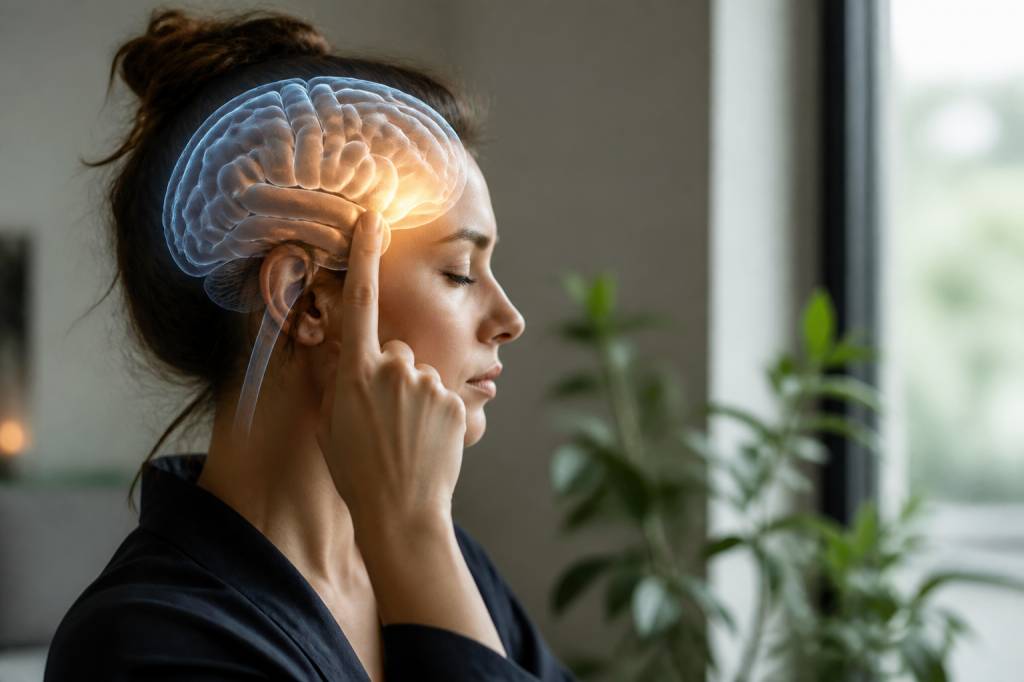
The brain is the ultimate performance engine. It coordinates every stride, every breath, every decision, and every recovery signal. Whether you are lifting in the gym, flowing through a yoga session, or simply trying to stay sharp during a demanding workday, your brain is working at full speed behind the scenes.
One useful way to understand this complex organ is to look at its four major sections, or lobes: the frontal, parietal, temporal, and occipital lobes. Each has specific responsibilities, but none works alone. Like a well-trained relay team, they constantly exchange information to help you move, think, remember, feel, and respond.
Understanding these four brain sections is not just a biology lesson. It can also help you make smarter choices about sleep, nutrition, exercise, stress management, and mental recovery. Let’s step inside the control room.
The frontal lobe: your strategy and action center
The frontal lobe sits at the front of the brain, just behind the forehead. It is strongly involved in planning, decision-making, attention, impulse control, problem-solving, and voluntary movement. In sporting terms, it is part coach, part captain, and part tactical analyst.
When you decide to increase your running pace, change direction on the court, or hold a yoga pose for five more seconds, the frontal lobe helps organize that intention. It also supports the motor cortex, an area responsible for sending movement commands to the muscles.
This region plays an important role in what specialists call executive functions. These include:
- Planning and organizing tasks
- Focusing attention and ignoring distractions
- Making decisions and evaluating risks
- Controlling impulses and emotional reactions
- Solving problems and adapting to new situations
- Using working memory to hold information briefly
Imagine learning a new exercise. Your frontal lobe helps you remember the sequence, concentrate on your technique, and adjust your form when something feels unstable. During a match or race, it helps you make rapid tactical choices: conserve energy now or attack the next opportunity?
The frontal lobe is also connected with personality and social behavior. It helps you pause before reacting, read a situation, and choose an appropriate response. That pause can be valuable after a frustrating training session or a missed goal. Not every bad workout needs a dramatic press conference.
How to support the frontal lobe:
- Prioritize sleep: Poor sleep can reduce attention, reaction time, decision-making, and self-control.
- Train with variety: Learning new movements, sports, or skills challenges the brain as well as the body.
- Use focused work periods: Short blocks of distraction-free concentration can strengthen attention habits.
- Practice mindful breathing: A few slow breaths before competition or a difficult conversation can create space between impulse and action.
- Fuel consistently: Regular meals containing complex carbohydrates, protein, healthy fats, and micronutrients support steady energy.
Exercise itself is one of the best investments in frontal-lobe function. Aerobic activity increases blood flow to the brain and may support attention, mood, and executive performance. You do not need to run a marathon. A brisk walk, cycling session, or energetic yoga flow can all be useful.
The parietal lobe: your body map and movement guide
Located behind the frontal lobe, the parietal lobe processes sensory information and helps you understand where your body is in space. It receives signals related to touch, pressure, temperature, pain, and body position. It is the brain’s internal navigation system.
Close your eyes and raise one hand above your head. You probably know where your hand is without looking. That ability depends partly on proprioception, the sense of body position, and the parietal lobe helps interpret those signals.
This function is essential in sport. A basketball player needs to know where the ball, feet, and opponents are without staring at every body part. A swimmer relies on spatial awareness to maintain position in the lane. During a yoga balance pose, the parietal lobe helps combine information from the feet, joints, muscles, eyes, and inner ear.
The parietal lobe also contributes to:
- Processing touch and pressure
- Recognizing the position and movement of body parts
- Understanding spatial relationships
- Coordinating visual information with movement
- Performing calculations and interpreting quantities
- Directing attention toward different parts of the environment
When you catch a ball, tie your shoes, or reach for a water bottle without knocking it over, several brain regions are cooperating. The parietal lobe helps create a practical map of your surroundings and your place within them.
This brain section also helps distinguish left from right and interpret complex visual-spatial patterns. If you have ever struggled to follow a complicated dance routine or copied a new strength exercise from a video, you have felt the challenge of spatial processing in real time.
How to support the parietal lobe:
- Challenge coordination: Try balance drills, agility ladders, dance, martial arts, or exercises performed with controlled changes of direction.
- Train proprioception: Single-leg stands, slow lunges, and stability exercises can make you more aware of body position.
- Protect sensory health: Wear suitable footwear and safety equipment, and do not ignore persistent numbness, pain, or changes in sensation.
- Explore new environments: Walking unfamiliar routes or practicing outdoor activities stimulates spatial awareness.
- Move with control: Speed is impressive, but precise movement teaches the brain where every joint and muscle belongs.
Balance work is especially valuable because it combines sensory input, attention, and movement control. Even a few minutes of standing on one leg while brushing your teeth can turn an ordinary routine into a small neurological workout. Just keep the bathroom floor dry. Brain training should not require an emergency room.
The temporal lobe: memory, sound, and emotional meaning
The temporal lobes are located on the sides of the brain, roughly behind the temples. They help process sound, understand language, form memories, and connect experiences with emotional meaning.
When a familiar song suddenly takes you back to a specific race, holiday, or training session, the temporal lobe is part of the reason. Music can trigger memories and emotions with remarkable speed. For many athletes, a certain playlist becomes linked with preparation, confidence, and competitive energy.
The temporal lobe supports several key functions:
- Understanding spoken language
- Recognizing sounds and voices
- Creating and retrieving memories
- Connecting sensory experiences with emotions
- Identifying objects and familiar faces
- Supporting learning through the interpretation of information
Memory is crucial for athletic development. The first time you perform a complex lift or swimming technique, the movement may feel awkward and demanding. With repetition, the brain stores parts of that experience, allowing the skill to become more efficient. The body appears to “remember,” but the brain is constantly refining the instructions.
The temporal lobe also helps you understand coaching cues. When a trainer says, “Keep your chest lifted and drive through the heel,” your brain must process the language, connect it with movement, and apply it under physical pressure.
Emotional memory can work for or against performance. A positive experience may build confidence, while a previous injury or failure may create hesitation. This does not mean you should ignore difficult experiences. It means that gradual exposure, good coaching, and calm repetition can help the brain form safer and more useful associations.
How to support the temporal lobe:
- Sleep after learning: Sleep helps the brain consolidate memories and skills acquired during the day.
- Learn actively: Explain a new concept aloud, practice a movement, or teach someone else what you know.
- Use music strategically: A motivating playlist can support mood and routine, while quieter music may help concentration or recovery.
- Stay socially connected: Conversation and meaningful relationships stimulate language, memory, and emotional processing.
- Manage hearing health: Protect your ears from excessive noise and seek professional advice if hearing changes appear.
Memory is not built by cramming one enormous session into a single day. It grows through repetition, recovery, and useful feedback. The same principle applies to strength training: one heroic workout does not create lasting performance. Consistency wins the long race.
The occipital lobe: turning light into useful information
The occipital lobe is located at the back of the brain. Its primary role is visual processing. It receives information from the eyes and helps interpret color, shape, movement, depth, and visual patterns.
Seeing is not as simple as opening your eyes. Light enters the eye, signals travel through the visual system, and the occipital lobe begins organizing those signals into meaningful information. Is that object a ball, a person, a line on the track, or an obstacle that needs to be avoided?
The occipital lobe contributes to:
- Detecting color and contrast
- Recognizing shapes and objects
- Processing movement and speed
- Interpreting depth and distance
- Supporting hand-eye coordination
- Helping the brain understand visual patterns
Visual processing is fundamental in almost every sport. A tennis player tracks a ball moving at high speed. A cyclist scans the road for traffic and changes in surface. A goalkeeper estimates angles and distance in a fraction of a second. Even a yoga practitioner uses visual information to align the body and maintain balance.
Because visual signals travel through complex pathways, the occipital lobe works closely with the parietal and temporal lobes. One system helps answer “Where is it?” while another helps answer “What is it?” This cooperation allows you to react quickly and accurately.
How to support the occipital lobe and visual brain health:
- Schedule regular eye examinations: Clear vision is an important part of movement, safety, and everyday independence.
- Use sensible screen habits: Take regular breaks, adjust brightness, and maintain a comfortable viewing distance.
- Train visual reactions: Ball games, racquet sports, and reaction drills challenge tracking and coordination.
- Protect your eyes: Use appropriate eyewear during outdoor activities, cycling, swimming, or contact sports.
- Support circulation: Regular physical activity, healthy blood pressure, and avoidance of smoking benefit overall vascular health.
Visual fatigue can make concentration feel harder, especially after long hours on a screen. The simple answer is not to panic; it is to blink, look into the distance, adjust your workstation, and give your eyes regular breaks.
How the four sections work together
Although it is useful to study each lobe separately, the brain does not operate in isolated departments. A single action, such as crossing a busy street, may require all four sections to cooperate.
The occipital lobe processes the approaching car. The parietal lobe estimates its position and your distance from it. The temporal lobe interprets a horn or someone shouting a warning. The frontal lobe evaluates the situation and decides whether to stop, move forward, or change direction.
Sport makes this teamwork obvious. During a fast counterattack, you see the play, judge space, remember the strategy, control your body, and make a decision. The brain is not waiting for one section to finish before another begins. It is running multiple operations at once, like a high-performance training session with no spare minutes.
That is why brain health should be approached from several angles rather than through one miracle supplement or one fashionable exercise. The most reliable support comes from daily habits that protect circulation, reduce unnecessary stress, and provide the brain with stimulation and recovery.
Daily habits that support overall brain health
A brain-friendly lifestyle does not need to be extreme. It needs to be repeatable. Start with the basics:
- Move regularly: Combine aerobic activity, strength training, mobility work, and balance exercises.
- Sleep consistently: Most adults benefit from a regular sleep schedule and sufficient nightly rest.
- Eat a varied diet: Include vegetables, fruit, legumes, whole grains, fish or other protein sources, nuts, seeds, and healthy fats.
- Drink enough water: Even mild dehydration can make fatigue and concentration problems feel worse.
- Manage stress: Breathing exercises, meditation, time outdoors, and realistic planning can lower mental overload.
- Keep learning: Read, study a language, play music, learn a new sport, or challenge yourself with unfamiliar skills.
- Protect your head: Use helmets and appropriate safety equipment, and take head injuries seriously.
- Stay connected: Social interaction supports emotional well-being and cognitive engagement.
There is no need to wait for a perfect Monday. Take a walk today. Put the phone down during one meal. Go to bed thirty minutes earlier. Practice a movement slowly instead of rushing through it. Small actions repeated over time create the strongest training effect, for both body and brain.
Your brain is not separate from your fitness. It is the system that makes fitness possible. Treat its four major sections with the same respect you give your muscles: challenge them, fuel them, allow them to recover, and listen when something feels wrong. Performance begins in the mind, but it is built through consistent action.