


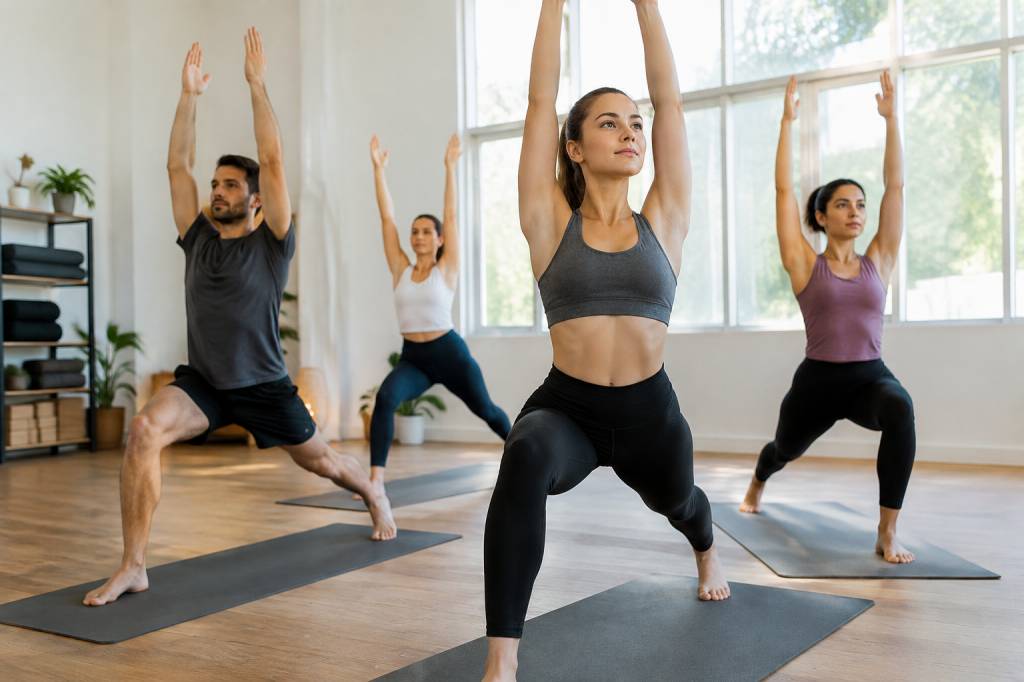
Your yoga studio is more than a room with mats, mirrors, and a playlist designed to keep everyone calm. It can become the place where you rebuild your energy, protect your health, and learn how to move through pressure without carrying it in your shoulders all day.
But choosing the right studio is not always easy. One place may promise intense workouts and dramatic transformations. Another may focus on meditation, slow breathing, and deep relaxation. Both can be valuable, but the best choice depends on your body, your goals, your experience, and the kind of energy you want to cultivate.
Think of it like choosing a training partner. The right studio should challenge you without breaking you, support your progress without making you feel inadequate, and leave you stronger than when you walked through the door.
Start with your health and energy goals
Before comparing studios, ask yourself a simple question: what do I actually want from yoga?
Your answer will guide almost every decision. You may want to improve flexibility, build strength, manage stress, recover from another sport, sleep better, or create a consistent wellness routine. Yoga can serve all of these purposes, but different classes place emphasis on different results.
- For strength and stamina: look for Vinyasa, Power Yoga, Ashtanga, or Rocket Yoga classes.
- For mobility and recovery: consider Hatha, Yin, restorative yoga, or mobility-focused sessions.
- For stress relief: search for restorative yoga, slow flow, breathwork, or meditation classes.
- For balance and coordination: Hatha, Iyengar, and alignment-based practices can be excellent choices.
- For prenatal or postnatal support: choose teachers with specific training in these areas.
Be honest about your current condition. If you are exhausted, injured, or returning to exercise after a long break, the most intense class in town may not be the smartest starting line. Your ego might want the hard session. Your joints may vote for something gentler.
Understand the main yoga styles
You do not need to become an expert in Sanskrit before attending your first class, but understanding the major styles will prevent a lot of confusion.
Hatha yoga usually moves at a steady pace, with time to explore postures and breathing. It is often suitable for beginners and people who want to improve technique without rushing.
Vinyasa yoga links movement with breath in a flowing sequence. The pace can vary significantly from one teacher to another. One Vinyasa class may feel like moving meditation; another may feel like a demanding athletic session.
Ashtanga yoga follows a more structured sequence and can be physically challenging. It appeals to people who enjoy discipline, repetition, and measurable progress.
Yin yoga uses longer-held poses to target connective tissues and encourage deep relaxation. It is slower, but “slow” does not mean effortless. Holding a position for several minutes can test your patience more than a fast flow.
Restorative yoga is designed to calm the nervous system. Props support the body while you remain in comfortable positions for longer periods. It can be especially useful during stressful seasons or after intense training.
Iyengar yoga emphasizes alignment and precision, often using blocks, straps, bolsters, and other props. It can be a strong option for people who appreciate detailed instruction.
If you are unsure, choose a studio offering several styles. This gives you room to experiment instead of forcing your body into one format every week.
Check the teacher’s qualifications and approach
A beautiful studio cannot compensate for poor instruction. The teacher is the engine of the experience, so take time to learn who will be guiding your practice.
Look for clear information about training, certifications, experience, and areas of specialization. A standard teacher-training certificate is a useful starting point, but experience matters too. Someone who has worked with beginners, athletes, older adults, or people recovering from injuries may be better equipped to adapt a class safely.
Pay attention to how the teacher speaks about the body. Responsible instructors do not promise miracle cures, instant flexibility, or guaranteed weight loss. They should encourage awareness rather than competition and offer modifications without making anyone feel weak.
A good teacher might say, “Try this variation if your lower back feels uncomfortable.” A careless one may insist that pain is simply a sign of progress. It is not. Effort can be productive; sharp or persistent pain deserves attention.
Before booking, check whether teachers are willing to answer questions. A short, respectful conversation can reveal a lot about their professionalism and attitude.
Visit the studio before committing
Photos can make almost any studio look peaceful. Real life is a better test.
Visit the location if possible and observe the atmosphere. Is the reception area welcoming? Do staff explain the schedule clearly? Are the changing rooms clean? Is the practice room well ventilated? Does the space feel calm, organized, and safe?
Cleanliness is not a luxury in yoga. Mats, blocks, bolsters, and shared surfaces should be maintained regularly. If the studio smells like forgotten gym socks and questionable disinfectant, your nervous system may not reach enlightenment anytime soon.
Also consider practical details such as noise, temperature, lighting, and room size. Some people thrive in a warm, energetic environment. Others become distracted or uncomfortable when the room is crowded or overheated.
Ask whether the studio provides equipment or expects you to bring everything. Quality props can make a major difference, particularly if you are new to yoga or need support during certain poses.
Choose a location that supports consistency
The best yoga studio is not necessarily the most fashionable one. It is the one you will actually attend.
A studio located forty minutes away may look perfect online, but distance becomes a serious opponent when work runs late, rain starts falling, or your motivation drops. Convenience protects consistency. Look for a location close to home, work, or another regular part of your routine.
Think about your realistic schedule. If you are a morning person, early classes may give you a powerful start. If your energy rises later in the day, evening sessions may fit better. Weekend classes can help you build the habit without adding pressure to busy weekdays.
Review the cancellation policy, booking system, parking, public transport, and class capacity. These details may sound boring, but they can determine whether yoga becomes part of your life or another subscription you forget to use.
Try different classes before buying a membership
Many studios offer an introductory class, trial week, or discounted first month. Use it. One class is rarely enough to judge the full experience, but it can reveal whether the studio matches your needs.
Try different teachers and class formats. A beginner class may feel completely different from a lunchtime flow or a restorative evening session. Notice how your body responds during the class and how you feel afterward.
- Did the instructor explain movements clearly?
- Did you feel encouraged rather than judged?
- Were modifications available?
- Did the class match its advertised level?
- Did you leave energized, relaxed, or excessively drained?
- Could you imagine returning regularly?
Do not judge a class only by how difficult it was. A session that leaves you crawling toward the exit may deliver a temporary sense of achievement, but it may not support long-term health. Progress requires challenge, recovery, and repetition. The winning formula is rarely maximum intensity every time.
Pay attention to accessibility and inclusivity
Yoga should meet people where they are. A welcoming studio makes space for different bodies, ages, fitness levels, abilities, and backgrounds.
Look for teachers who offer several versions of a posture and explain that props are tools, not signs of failure. A block is not a crutch. It is equipment, just like a dumbbell or resistance band. Even advanced practitioners use props when they improve alignment and control.
Ask whether the studio can accommodate physical limitations, pregnancy, chronic conditions, or previous injuries. You should always consult a healthcare professional when necessary, but the studio should still be prepared to communicate respectfully and provide sensible alternatives.
Inclusive language matters too. Be cautious of environments that focus heavily on appearance, extreme flexibility, or “earning” food through exercise. Yoga is not a competition for the deepest forward fold. Your hamstrings are not keeping a scoreboard.
Evaluate the studio’s philosophy
Every studio has a culture, even when it does not advertise one. Some prioritize athletic performance. Others focus on spiritual practice, mindfulness, community, or therapeutic movement.
None of these approaches is automatically right or wrong. The key is compatibility.
If you want a powerful physical workout, a studio centered entirely on gentle meditation may not satisfy you. If you are seeking stress relief, a competitive environment filled with advanced poses and performance pressure may increase tension rather than reduce it.
Read the studio’s website and social media posts. Listen to how they describe students and progress. Do they celebrate consistency, self-awareness, and healthy adaptation? Or do they promote perfection, rapid results, and impossible body ideals?
The right philosophy should help you build a stronger relationship with your body. You should leave class more aware, not more critical of yourself.
Consider cost without ignoring value
Yoga memberships can vary widely in price. Compare what is included before making a decision. Some studios offer unlimited classes, while others use packages or drop-in rates. Online classes, workshops, teacher consultations, and equipment may be included—or charged separately.
The cheapest option is not always the most affordable if you rarely attend. Likewise, the most expensive studio is not automatically the best. Calculate the cost per class based on your realistic attendance, then consider the quality of instruction, convenience, cleanliness, and community.
Ask about student discounts, off-peak memberships, introductory offers, and flexible plans. Avoid signing a long contract until you know the studio fits your schedule and expectations.
Your health is an investment, but a sustainable routine should not create unnecessary financial stress. Energy grows more easily when your budget is not gasping for air.
Notice how your body feels after class
Your post-class response is valuable feedback. You may feel calm, clear-headed, and pleasantly challenged. You may notice improved mobility or a deeper breath. These are positive signs.
Feeling tired after a demanding session can be normal, especially when you are new to the practice. However, frequent pain, dizziness, numbness, or excessive fatigue should not be ignored. Speak with the teacher, reduce the intensity, or seek professional advice if symptoms continue.
Keep a simple note after each class. Record the style, teacher, intensity, mood, and physical response. After a few sessions, patterns will appear. Perhaps Vinyasa boosts your energy on busy mornings, while Yin helps you sleep. Perhaps a certain teacher explains alignment in a way that finally makes sense.
That information is more useful than chasing a trendy studio or copying someone else’s routine.
Build a practice that gives energy back
The right yoga studio should challenge your limits while respecting them. It should offer skilled teachers, a safe environment, practical scheduling, and a culture that supports your health rather than your insecurities.
Start with your goals. Explore different styles. Test the atmosphere. Ask questions. Try a few classes before committing. Most importantly, choose a place that makes regular practice feel realistic and rewarding.
You do not need the most advanced studio, the most expensive mat, or the ability to balance on your head while smiling serenely. You need a space where you can breathe, move, recover, and return consistently.
That is where yoga starts doing its real work: not by turning every session into a heroic performance, but by helping you carry more energy into the rest of your life.