
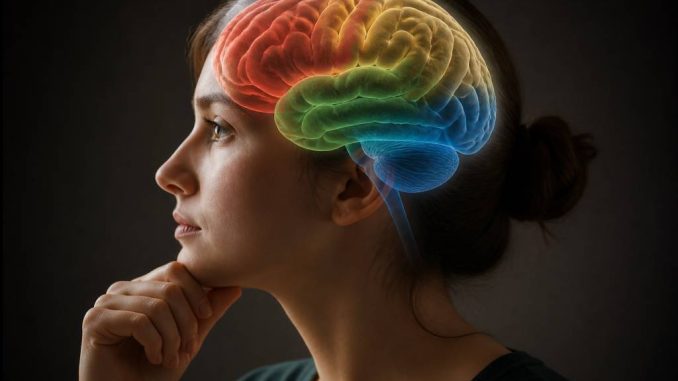
Your brain is not a single “command center” sitting there like a coach on a quiet bench. It’s more like a high-performance team: three major players, each with a distinct job, each reacting fast, and each relying on the others to keep you moving, thinking, and staying alive.
If you’ve ever sprinted for a bus, held a yoga pose while your legs started shaking, or made a split-second decision on the field, you’ve seen this system in action. The brain doesn’t work in isolation. It works as a unit. And understanding the three main parts of the brain helps explain why you react, balance, learn, and adapt the way you do.
The cerebrum: the thinking engine
The cerebrum is the largest part of the brain, and it usually gets the spotlight. It’s the part responsible for conscious thought, memory, language, decision-making, sensory processing, and voluntary movement. In short: it helps you think before you act, and sometimes act before you think. We’ve all been there.
It’s split into two hemispheres, left and right, which communicate constantly through a thick bundle of nerve fibers called the corpus callosum. The left side is often linked with language and logic, while the right side is more associated with spatial awareness, creativity, and pattern recognition. That said, the brain is not a cliché personality quiz. Both hemispheres work together all the time.
The cerebrum is also divided into lobes, and each one handles different tasks:
- Frontal lobe: planning, decision-making, problem-solving, and voluntary movement
- Parietal lobe: touch, pressure, temperature, and spatial awareness
- Temporal lobe: hearing, memory, and language comprehension
- Occipital lobe: vision and visual processing
Think about a tennis player reading an opponent’s serve. The occipital lobe processes the visual input, the temporal lobe helps interpret what’s happening, the frontal lobe chooses the response, and then the body acts. That’s not one brain region working alone. That’s a relay race with excellent timing.
The cerebrum is also where learning happens in a big way. Every time you repeat a movement, memorize a route, or improve your breathing technique in yoga, you’re strengthening neural pathways. The more you use a skill, the more efficient your brain becomes at performing it. It’s like training a muscle, except the weights are ideas, habits, and repetition.
The cerebellum: the coordination specialist
If the cerebrum is the strategist, the cerebellum is the movement coach. Tucked under the back of the brain, it may be smaller than the cerebrum, but don’t underestimate it. The cerebellum plays a huge role in balance, posture, coordination, timing, and fine motor control.
When you reach for a water bottle without knocking it over, land a jump cleanly, or hold Warrior III without toppling like a stiff lamp, your cerebellum is working behind the scenes. It takes information from your muscles, joints, eyes, and inner ear, then fine-tunes your movements so they feel smooth and controlled.
This part of the brain is especially important for athletic performance. Imagine a runner sprinting on uneven ground. The cerebrum tells the legs to move, but the cerebellum adjusts every step to keep the body balanced and efficient. Without it, movement would be clumsy, delayed, and much less precise.
The cerebellum also helps with motor learning. That means when you practice a skill over and over, like a golf swing, a yoga transition, or even a new dance step, the cerebellum helps your brain store the movement pattern. At first, you think hard about every detail. Later, your body starts to perform the movement almost automatically. That’s not magic. That’s neural refinement.
Here’s a simple way to picture it: the cerebrum says, “Move.” The cerebellum says, “Yes, but let’s make that movement cleaner, steadier, and more accurate.” A useful team member, no doubt.
The brainstem: the life-support base
The brainstem is the oldest and most basic part of the brain in evolutionary terms, but basic does not mean minor. It is absolutely essential. It connects the brain to the spinal cord and controls the functions that keep you alive without you having to think about them: breathing, heart rate, blood pressure, swallowing, and sleep-wake cycles.
The brainstem is made up of several structures, including the midbrain, pons, and medulla oblongata. Each contributes to automatic functions and communication between the brain and body. If the cerebrum is the decision-maker and the cerebellum is the movement tuner, the brainstem is the power supply. No power, no game.
Let’s say you’re doing a hard workout. Your heart rate rises, your breathing quickens, and your body works to deliver more oxygen to your muscles. The brainstem is part of the control system managing that response. You’re not manually telling your heart to beat faster. Thankfully, your brainstem handles it while you focus on the workout itself.
It also plays a role in reflexes and alertness. When a loud noise startles you, or when you instantly pull your hand away from something hot, the brainstem helps coordinate rapid responses. It acts quickly because survival doesn’t wait for a committee meeting.
And sleep? The brainstem is involved there too, helping regulate when you feel awake and when you start to wind down. That matters more than many people realize. Recovery, focus, learning, mood, and physical performance all depend on solid sleep regulation.
How the three parts work together
The real power of the brain is not in each part alone, but in how they collaborate. The cerebrum, cerebellum, and brainstem constantly exchange information to help you function in real time. This teamwork is fast, layered, and incredibly efficient.
Take a simple example: catching a ball. Your eyes track the ball, and the cerebrum processes what you see. Your cerebrum calculates where the ball is going and decides to move your hand. The cerebellum adjusts the timing, distance, and coordination so your hand arrives at the right place at the right moment. Meanwhile, the brainstem keeps you alert, maintains your posture, and supports the automatic body functions that allow you to stay focused.
Now think about a yoga class. You’re balancing, breathing, concentrating, and correcting your posture. The cerebrum helps you follow instructions and stay mentally focused. The cerebellum keeps your body aligned as you shift weight. The brainstem regulates your breathing and supports the calm, steady state that lets you hold the pose. That’s not just flexibility. That’s a full-brain performance.
Here’s another example: a basketball player driving to the hoop under pressure. The cerebrum reads the defense, chooses whether to pass or shoot, and processes the sound of the crowd. The cerebellum controls the fluidity of the dribble, footwork, and jump. The brainstem maintains arousal, heart rate, and breathing so the player can stay sharp. If one part falls behind, performance suffers.
And in daily life? The same system helps you drive, cook, type, climb stairs, and react to a sudden obstacle. Your brain is not just “thinking.” It’s constantly synchronizing perception, movement, and internal regulation.
What happens when one part is disrupted?
Because these three parts work so closely together, a problem in one area can affect many functions. That’s why brain health matters in such a practical way. It’s not abstract. It affects how you move, focus, recover, and respond to the world.
If the cerebrum is affected, a person may have trouble with memory, speech, reasoning, or voluntary movement. If the cerebellum is damaged, balance and coordination can suffer, making movement shaky or inaccurate. If the brainstem is compromised, the effects can be much more serious because it controls vital automatic functions like breathing and heart rate.
This is also why head injuries deserve serious attention. A hit that seems “not that bad” can still affect coordination, reaction time, or concentration. Athletes know this, but everyday people should know it too. The brain is resilient, yes, but it’s not invincible.
Some signs that brain function may be off include:
- Frequent headaches or dizziness
- Problems with balance or coordination
- Memory lapses beyond normal forgetfulness
- Difficulty concentrating
- Changes in speech, vision, or movement
- Unusual fatigue or sleep disruption
If symptoms appear suddenly or after an injury, medical attention matters. Fast action can make a real difference.
How to support a healthy brain
Brain health is not about one miracle habit. It’s built through daily decisions, the same way athletic performance is shaped by training, rest, and recovery. Your brain likes challenge, but it also needs fuel and downtime.
A few habits make a big difference:
- Move regularly: Exercise improves blood flow and supports brain function
- Sleep well: Memory, focus, and recovery all depend on quality sleep
- Eat smart: Nutrients like omega-3s, protein, and antioxidants matter
- Stay mentally active: Learning, reading, and problem-solving keep neural pathways engaged
- Manage stress: Chronic stress can interfere with memory, attention, and mood
- Protect your head: Helmets and safe training habits are not optional extras
Stress management deserves special attention. When stress runs too high, the brain can become less efficient at focus and decision-making. That’s one reason why practices like yoga, breathing drills, and mindful recovery are more than wellness trends. They help the brain and body stay coordinated under pressure.
And yes, hydration matters too. Dehydration can affect concentration, reaction time, and physical performance. A tired brain often starts with a tired body.
Why this matters beyond biology
Understanding the three parts of the brain gives you more than trivia. It helps explain why performance, learning, and recovery all depend on the same integrated system. When you train your body, you are also training your brain. When you rest, you are giving that system time to rebuild. When you focus, you are helping different brain regions sync up more efficiently.
That’s why elite athletes, dancers, martial artists, and even casual fitness enthusiasts benefit from training that challenges both body and mind. Coordination drills, balance work, breath control, reaction practice, and skill repetition all strengthen the brain-body connection.
So the next time you nail a difficult movement, keep your balance in a shaky pose, or make a smart split-second decision on the court, remember what’s happening behind the scenes. Your cerebrum is analyzing. Your cerebellum is refining. Your brainstem is keeping the whole operation alive and steady. Different jobs, one mission.
And that mission is simple: keep you moving, thinking, and adapting at full speed.