
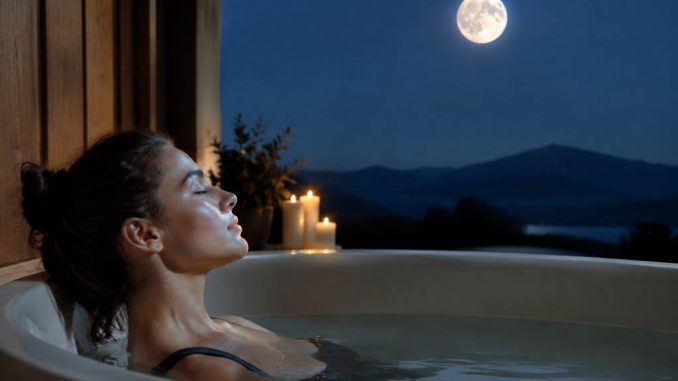
There is a moment after a hard training session when the body is tired, the mind is still sprinting, and sleep feels strangely far away. Your muscles are asking for rest, but your thoughts are replaying the day at full speed. This is where a moon bath can change the rhythm.
A moon bath is a mindful ritual spent outdoors under the night sky, usually in gentle moonlight. It is not a replacement for a hot shower, a recovery meal, or proper sleep. Think of it as a deliberate pause: a few quiet minutes to slow your breathing, release mental tension, and reconnect with your body.
For athletes, busy professionals, and anyone carrying too much mental noise, this simple practice can become a powerful evening reset. No expensive equipment. No complicated app. Just a safe outdoor space, a little time, and the willingness to stop chasing the next task.
What is a moon bath?
A moon bath, sometimes called moon bathing, is the practice of sitting, standing, or walking quietly beneath the moon while focusing on awareness and relaxation. Some people treat it as a spiritual ritual. Others approach it as a form of outdoor mindfulness. You do not need to follow a specific belief system to enjoy it.
The idea is beautifully simple: step outside, reduce distractions, observe the night, and let your nervous system shift from “go” to “recover.” The moon does not need to perform miracles. Its soft light, the cooler air, and the natural quiet can create the conditions for a calmer evening.
Unlike sun exposure, moonlight is not a meaningful source of vitamin D. It is also far too dim to provide the same biological effects as daylight. The benefits of a moon bath come mainly from the ritual itself: fresh air, reduced screen time, slower breathing, gentle attention, and a clear boundary between the active day and the sleeping night.
Why this ritual can support relaxation
Your nervous system responds to the signals around you. Bright screens, notifications, traffic, and late workouts can keep the body in a state of alertness. A quiet moon bath offers the opposite message: there is nothing to solve right now.
When you sit outside without multitasking, your breathing often becomes slower naturally. You may notice tension in your jaw, shoulders, hands, or hips. That awareness is useful. You cannot release what you never notice.
The darkness can also reduce visual stimulation. During the day, your eyes and brain process an endless stream of movement and information. At night, attention becomes less scattered. A tree line, the shape of the moon, or the sound of distant wind gives your mind one calm point of focus.
This does not mean one moon bath will erase stress. Life is not a spa advertisement, and the nervous system is not a light switch. But five to fifteen minutes of intentional stillness can help lower the volume before bed.
Moon bathing and better sleep
Sleep begins before your head touches the pillow. The transition matters. If you move directly from emails, intense exercise, or an argument into bed, your body may be horizontal while your mind is still running intervals.
A moon bath can act as a pre-sleep bridge. It creates a repeatable sequence:
- Finish the active part of the evening.
- Step away from bright screens and demanding tasks.
- Spend a few quiet minutes outdoors.
- Return inside for a simple bedtime routine.
Over time, the brain can associate this sequence with slowing down. That association is one reason consistent bedtime habits are so valuable. The moon is not hypnotizing you; your routine is teaching your body what comes next.
For the best sleep support, keep the ritual gentle. Avoid turning it into a late-night workout, an intense breath-holding challenge, or a deep philosophical debate with yourself at 11:45 p.m. The goal is calm, not another performance target.
If you are sensitive to cold, dress warmly. Shivering is not a mindfulness achievement. If bright outdoor lighting is unavoidable, sit away from it or choose a darker location. When you return inside, keep lights low and avoid jumping straight into social media. One glowing screen can undo the atmosphere faster than a referee’s whistle.
Can a moon bath improve energy?
Energy is not always created by pushing harder. Sometimes it returns when you stop wasting it on friction. Mental overload, poor sleep, constant notifications, and emotional tension can drain you even when your body has barely moved.
A moon bath may support energy indirectly by helping you recover more effectively. Better relaxation can make it easier to sleep. Better sleep can improve mood, focus, training quality, and appetite regulation. That is a far more realistic chain than claiming the moon itself recharges the body like a battery.
There is also a psychological benefit in choosing a ritual that feels personal. When you deliberately protect a few minutes for yourself, you reinforce a powerful message: recovery is part of the training, not a reward you earn only after exhaustion.
Try viewing energy through three lenses:
- Physical energy: the capacity to move, train, and complete daily tasks.
- Mental energy: the ability to focus without feeling constantly pulled in different directions.
- Emotional energy: the resilience to respond instead of reacting.
A short moon bath may not transform all three in one evening. But it can create a small opening in each one. Sometimes that is enough to change how tomorrow begins.
How to create your own moon bath ritual
You do not need a garden, a mountain, or a perfect full moon. A balcony, quiet courtyard, porch, or open window can work. If you live in a city, you may see less moonlight, but you can still benefit from stepping outside and looking up.
Start with ten minutes. That is long enough to feel a shift and short enough to remain realistic on a busy day. Choose a regular time, ideally between the end of your evening responsibilities and your bedtime routine.
Use this simple structure:
- Prepare the space: Choose a safe place where you can sit comfortably. Bring a blanket, warm layer, or cushion if needed.
- Put the phone away: Set it to silent or leave it indoors. If you need it for safety, keep it nearby but out of your hands.
- Arrive in the body: Feel your feet on the ground or your weight on the chair. Drop your shoulders and unclench your jaw.
- Slow the breath: Inhale gently through the nose for four counts and exhale for six. Repeat without forcing the rhythm.
- Observe the night: Notice the moon, clouds, temperature, sounds, and sensations in your skin.
- Close the ritual: Take one final deep breath, thank yourself for pausing, and return indoors slowly.
Do not judge the experience. Some nights will feel peaceful. Other nights will be filled with mosquitoes, street noise, or a mind that refuses to cooperate. That is normal. Mindfulness is not the absence of thoughts; it is the practice of noticing them without climbing aboard every one.
A five-minute moon bath for busy evenings
Short on time? Use the minimum effective dose.
Stand or sit outside and look toward the sky. Place one hand on your chest and one on your abdomen. Take five slow breaths. With each exhale, release one area of tension: forehead, jaw, shoulders, hands, and legs.
Then ask yourself three questions:
- What does my body need right now?
- What can wait until tomorrow?
- What is one thing I did well today?
The first question keeps the ritual connected to physical recovery. Maybe you need water, food, stretching, or sleep. The second question protects your attention from unnecessary nighttime problem-solving. The third question prevents the brain from ending the day with a highlight reel of mistakes.
Five minutes will not solve every problem. It can, however, stop the day from taking over the night.
Adding gentle movement
If sitting still feels impossible after training, add slow movement. Walk in a small circle, perform a few shoulder rolls, or move through a relaxed standing stretch. Keep the intensity low enough that your breathing remains comfortable.
A simple sequence might include:
- Five slow shoulder circles in each direction.
- A gentle side stretch on both sides.
- Three relaxed forward folds with soft knees.
- Thirty seconds of standing balance, using support if necessary.
- One minute of quiet breathing while looking at the sky.
This is not the moment to chase flexibility records. Nighttime recovery should leave you feeling more settled, not like you have started a second training session. Move with control and stop if you feel pain, dizziness, or unusual discomfort.
Moon phases and personal rhythm
Many people enjoy aligning their ritual with the moon’s phases. A full moon offers more visible light and can feel symbolic for letting go or celebrating progress. A new moon is darker and may invite reflection, planning, or a quieter reset.
There is no scientific requirement to match a particular phase. The most useful phase is the one that helps you maintain the habit. If the sky is cloudy, the ritual still works. If the moon is barely visible, your breathing, attention, and time outdoors still count.
You can also use different intentions throughout the month:
- New moon: choose one realistic habit or goal for the coming weeks.
- Waxing moon: build momentum through consistent action.
- Full moon: acknowledge progress and release unnecessary pressure.
- Waning moon: reduce overload and prioritize recovery.
These meanings are personal prompts, not medical facts. Use them as a framework for reflection, not as rules carved into the night sky.
Safety first, always
A mindful ritual should make you feel safer and steadier, not exposed or uncomfortable. Choose a familiar location with secure footing and adequate visibility. Avoid isolated areas if you are alone, and tell someone where you are going when necessary.
Check the weather, especially in cold, windy, or stormy conditions. Do not sit outside during lightning, extreme temperatures, or poor air quality. If allergies are a concern, choose a clean indoor alternative near an open window.
People who experience panic, trauma-related symptoms, or discomfort in darkness should adapt the practice. Keep a light on, sit near other people, or practice indoors with calming music. There is no prize for forcing yourself into an environment that feels threatening.
If sleep problems are persistent, severe, or affecting daily life, speak with a qualified healthcare professional. A moon bath can support a healthy routine, but it cannot diagnose or treat insomnia, depression, anxiety, or other medical conditions.
Make it a ritual you will actually repeat
The best wellness practice is not the most impressive one. It is the one you can repeat when the week becomes chaotic. Keep your moon bath simple enough to survive real life.
Place a cushion near the door. Keep a warm layer ready. Add the ritual to your evening calendar. Use the same breathing pattern each time. Afterward, write one sentence in a notebook: “Tonight I noticed…” This tiny record can reveal patterns in your energy, mood, training, and sleep.
You might discover that moon baths work best after lighter workouts, on evenings when you feel mentally overloaded, or before important training days. You may also find that a cloudy sky, a quiet balcony, and ten minutes without your phone are exactly what your recovery has been missing.
There is strength in knowing when to accelerate. There is equal strength in knowing when to ease off. Step outside, let the night slow the pace, and give your body a clear signal: the effort is over for today, and recovery has begun.